
Language
"Guardian on the Tip of the Tongue": How NIR Rapidly Uncovers Food problem
Nov 10, 2025
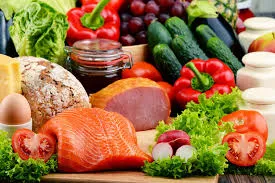
In the modern food industry, food fraud incidents—such as illegal gutter oil, adulterated honey, and water-injected meat—occur frequently, posing serious threats to public health. Traditional food safety testing methods often require complex sample preparation, the use of chemical reagents, and hours or even days to complete, making them unsuitable for rapid on-site screening. Near-Infrared (NIR) spectroscopy technology is revolutionizing this field, enabling instant, non-destructive detection and analysis of food authenticity and safety, right at the point of need.
Technical Principle: Unique Spectral "Fingerprints" of Food
NIR spectroscopy operates within the 950-1650 nm wavelength range. When light interacts with food components, molecular bonds (C-H, O-H, N-H) vibrate and absorb specific wavelengths, creating unique spectral "fingerprints." Different food components and adulterants exhibit distinct absorption patterns. For instance, the characteristic peaks of adulterant syrups in honey differ from those of natural honey, and the spectral features of illegal gutter oil are markedly different from those of legitimate edible oils. By analyzing these unique spectral signatures, NIR technology can quickly identify fraudulent substances.
Detection Performance: Accuracy and Speed
NIR technology demonstrates exceptional accuracy and speed in detecting key indicators of common food fraud:
Table 1: NIR Detection Capabilities for Common Food Fraud Indicators
|
Detection Target |
Key Detection Indicators |
Detection Limit/Accuracy |
Comparison with Traditional Methods |
|
Edible Oils & Fats |
Acid Value, Peroxide Value, Polar Compounds |
Acid Value ±0.1 mg KOH/g |
Requires chemical titration, 30 mins |
|
Honey |
Adulterant Syrups, Moisture Content |
Adulterant Syrup Detection Limit ≤5% |
Lab Chromatography, several hours |
|
Meat Products |
Moisture, Fat, Protein, Water Injection |
Moisture ±0.5% |
Time-consuming drying method |
|
Milk Powder |
Protein, Fat, Melamine |
Protein ±0.2% |
Kjeldahl Method, 2-3 hours |
Application Scenarios: Safeguarding the Entire Food Chain
NIR technology can be deployed at various stages of the food supply chain, enabling rapid screening and quality control:
Table 2: NIR Application Scenarios in the Food Safety Chain
|
Stage |
Application Scenario |
Core Value |
|
Raw Material Acceptance |
Rapid screening of unqualified raw materials |
Guards the first barrier, reduces risks |
|
Production Process |
Online monitoring of key ingredients |
Ensures product consistency |
|
Market Supervision |
On-site spot checks, instant screening |
Enhances regulatory efficiency and deterrence |
|
Consumer Level |
Rapid verification of product authenticity at point of sale/purchase |
Empowers consumers, builds trust |
Economic and Social Value: Efficiency and Sustainability
Compared to traditional methods, NIR technology offers significant advantages, including dramatically reduced detection time (from hours to seconds), elimination of chemical reagents (reducing costs and environmental impact), and non-destructive testing (preserving sample integrity). This allows for more frequent and widespread testing, effectively deterring fraudulent practices and building a more robust food safety ecosystem.
NIR spectroscopy technology is reshaping food safety monitoring paradigms, transitioning from lagging, laboratory-bound testing to proactive, on-site, and rapid screening. It acts as a reliable "Guardian on the Tip of the Tongue," providing robust technical support for ensuring food authenticity and safety—from farm to fork—and fostering greater transparency and trust within the food industry.
Contact US
Product Information
Quantity
Unit
Piece
Support order samples, customization, wholesale direct, and complete payment. If the product you look for does not have corresponding customized content, pls fill out the form below to contact us, and we will reply ASAP.